From 25 October to 16 November we are closed while we travel to Bihar, where our ancestors came from. We reopen on Tuesday 17 November. Read whyBook your visit

Heritage Spice House

Home  /  Experience  /  Mauritius & the Spice Route

Mauritius & the Spice Route

How Mauritius Became a Spice Island

Not one spice on this island is native to it. Every plant in our garden arrived by ship, in somebody’s luggage or somebody’s pocket — and the story of how they got here is the story of Mauritius itself.

Open 08:30 – 18:00 · Closed Wednesdays
Walk-ins welcome · Book ahead
Adults MUR 375
Where it begins

An empty island on the sea road

Mauritius had no people on it at all until the 1600s. No villages, no farming, no cooking tradition — and no spices. What it had was position: a green island with fresh water and a safe anchorage, sitting on the long sea route between Europe and the East.

Everything that is now Mauritian came off a boat. That includes the food.

01

The Dutch, and the first cane

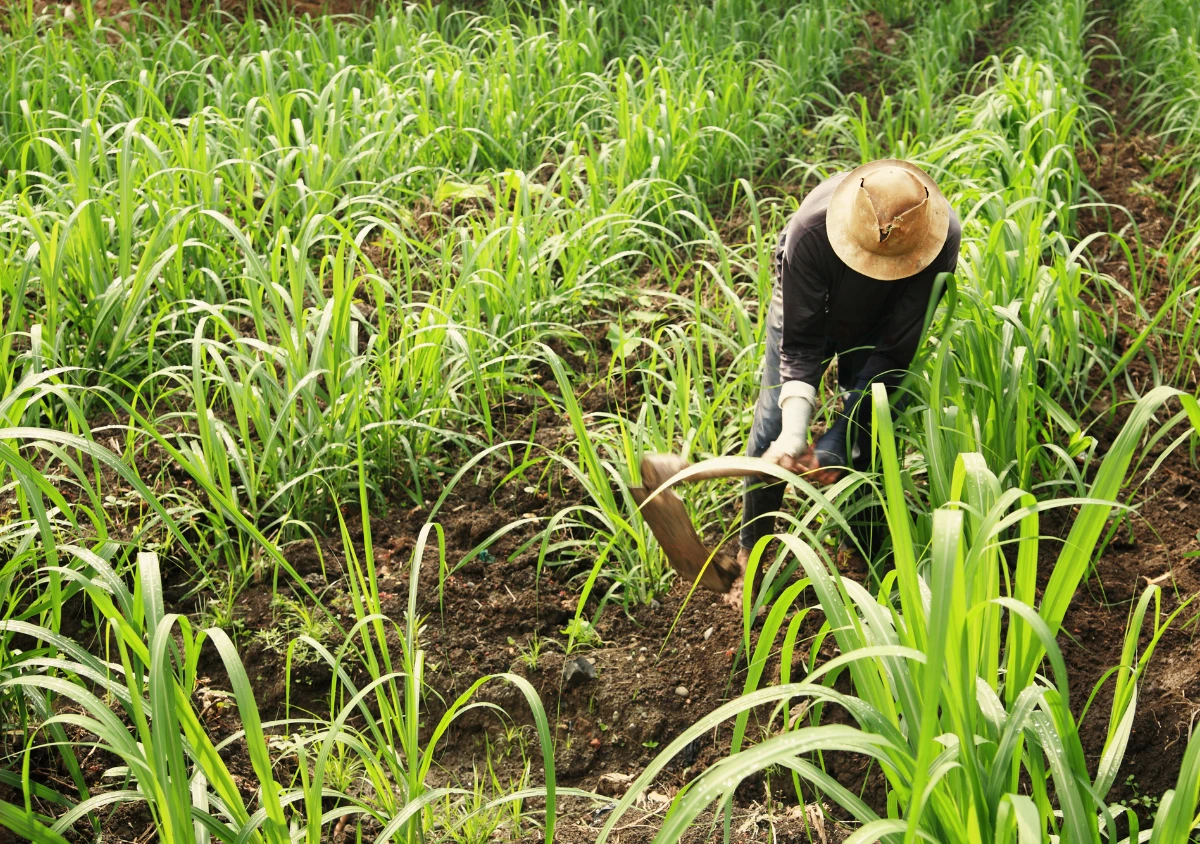
The Dutch settled the island in 1638, named it after Prince Maurice of Nassau, and brought in the crop that would decide everything afterwards: sugarcane, carried from Java. They also brought slaves from Madagascar and the African mainland, and the first domestic animals.

They abandoned the island in 1710. The cane stayed.

Sugarcane field in south Mauritius
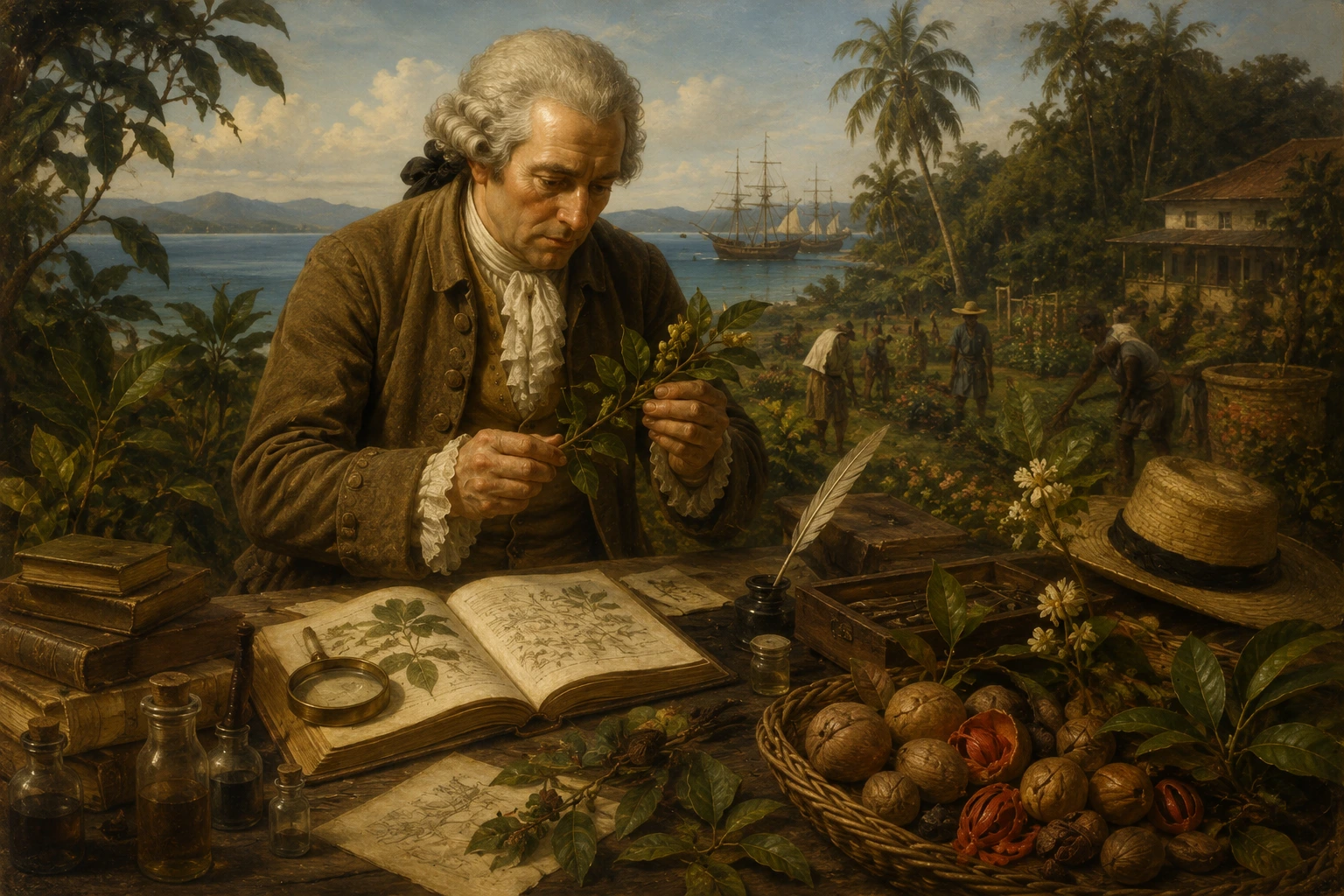
Pierre Poivre and the introduction of spices to Mauritius
02

Pierre Poivre and the stolen nutmeg

Under the French, the island became Isle de France, and in 1767 an intendant named Pierre Poivre arrived — a name that translates, almost too neatly, as Peter Pepper.

At the time the Dutch held a monopoly on nutmeg and clove and defended it fiercely. Poivre sent expeditions to the Moluccas and brought seedlings back to the botanical garden at Pamplemousses. Breaking that monopoly is the single act that turned this island from a staging post into a spice island, and the garden he planted is still there.

03

Four migrations, one spice cupboard

The British took the island in 1810. After slavery was abolished in 1835, indentured labourers began arriving from India in very large numbers — the arrival depot at Aapravasi Ghat is now a UNESCO World Heritage site — and with them came cumin, coriander, turmeric, fenugreek, mustard seed and the whole grammar of masala.

Chinese traders brought their own ingredients and techniques. Malagasy and African families had already shaped what was cooked here. The French left the roux, the baguette and the habit of good bread.

Four migrations, one kitchen. That is why a Mauritian Sunday lunch can contain a curry, a rougaille, a chatini and a farata without anyone finding it strange.
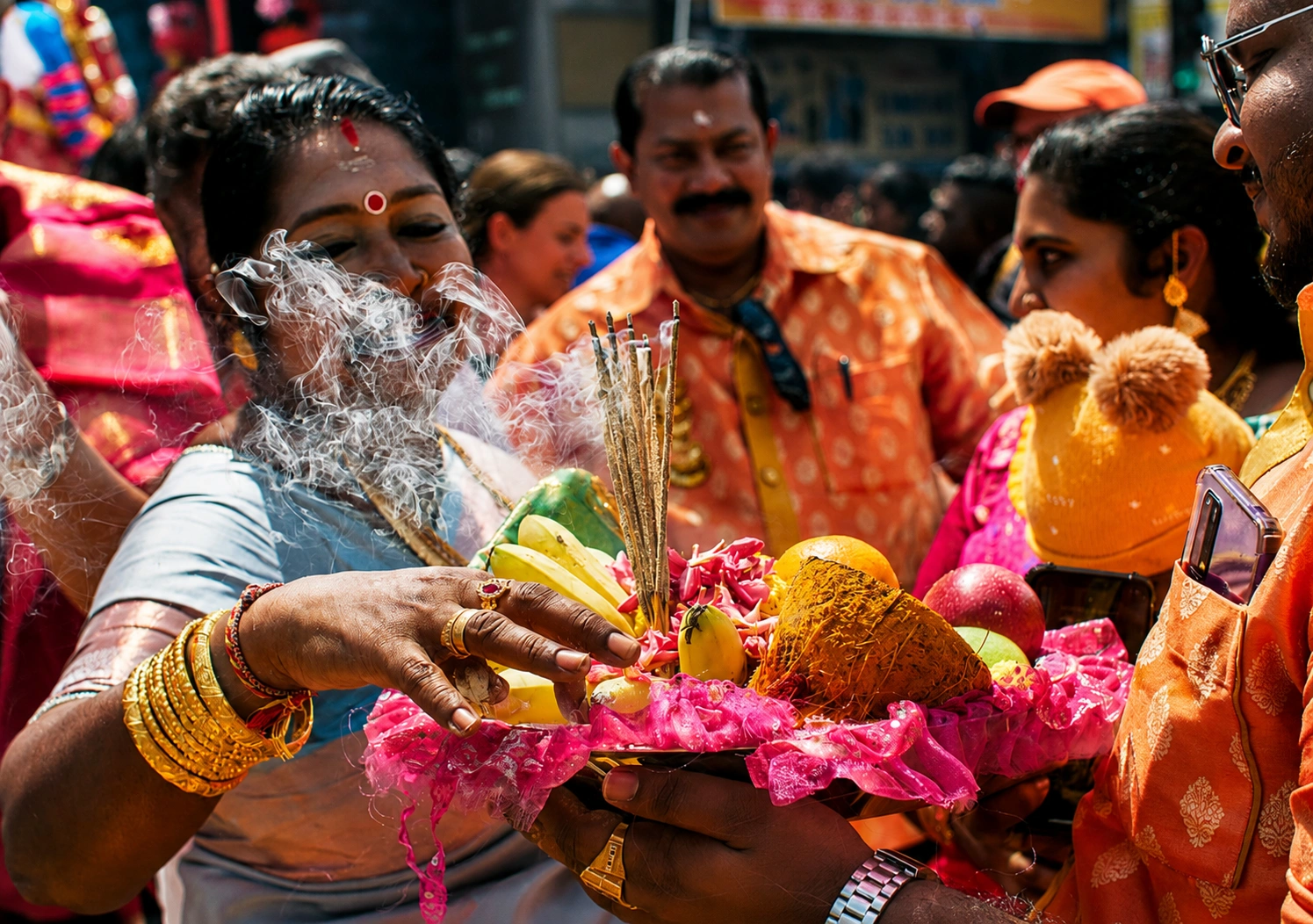
The people of Mauritius, shaped by four migrations
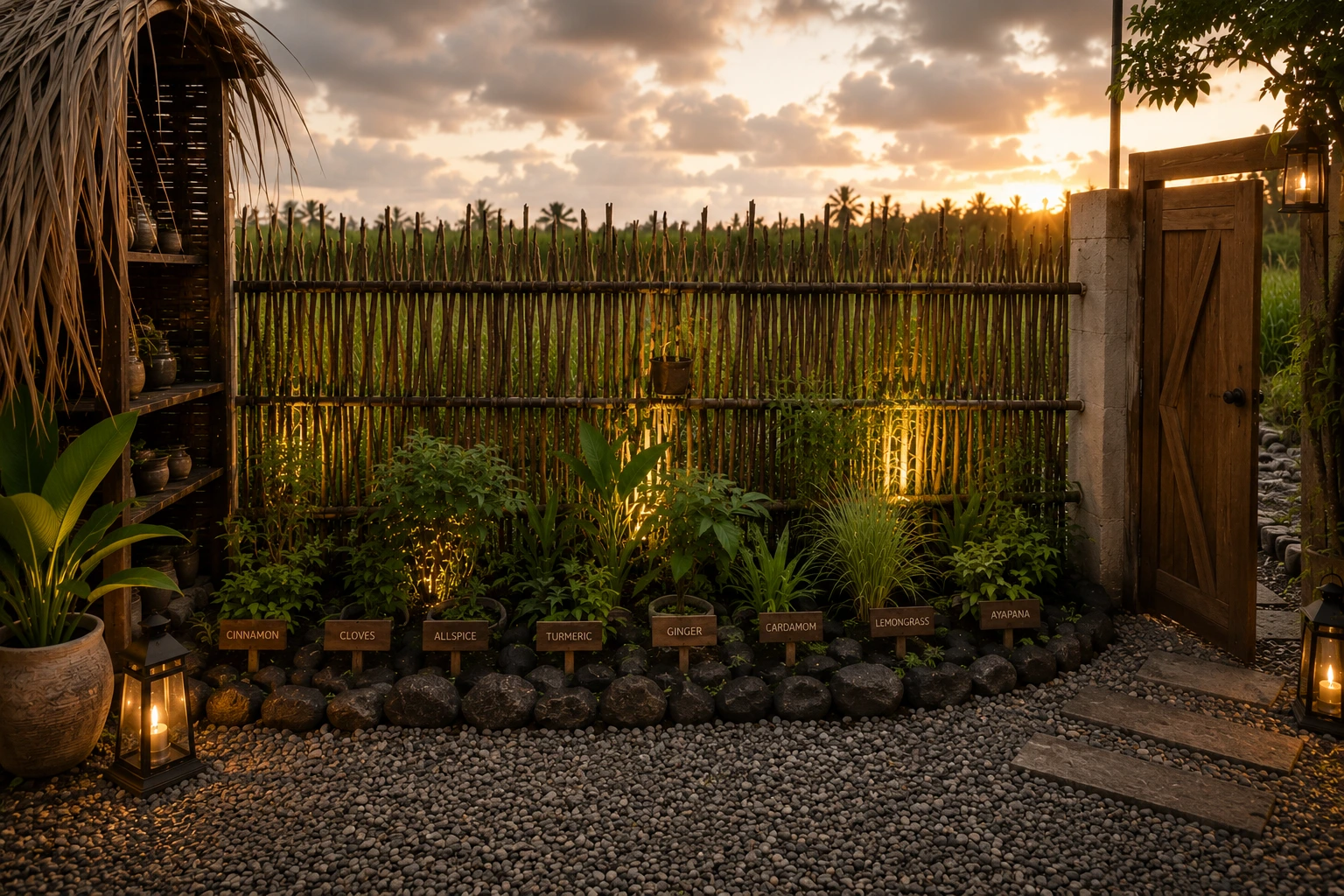
Spice nursery at Heritage Spice House, Riambel
04

What the route left behind

The result is a spice tradition that belongs to nowhere else. Mauritian masala is not an Indian curry powder and not a colonial blend — it is its own ratio, worked out in island kitchens over generations, leaning on coriander and cumin with turmeric and chilli behind them.

Combava, curry leaf, lemongrass, ginger, thyme and cinnamon all grow here now as if they had always been here. In our garden you can see most of them within a few steps of each other, which is the shortest version of this entire history you will ever get.

Where they came from

Six spices and their passage here

Every one of these grows in our garden. None of them started here.

Turmeric

From South Asia, with the indentured families. The colour of almost every Mauritian curry, and the plant that survives cyclone season better than anything else in the bed.

Clove

From the Moluccas, by way of Poivre’s expeditions. One of the two spices the Dutch monopoly was built on.

Nutmeg

The other one. Smuggled out of the same islands and planted at Pamplemousses in the 1770s.

Coriander

The backbone of Mauritian masala, and the reason our blend tastes rounder and less sharp than an Indian curry powder.

Combava

Kaffir lime, arriving from Southeast Asia. Dried and grated, it is the smell most Mauritians associate with home.

Lemongrass

Also from the east. Boiled for tea, used for fever, and still growing at the edge of the vegetable alley.

★★★★★
“We found this hidden pearl during our search for spices. What we appreciated the most is that it’s not just a shop but an opportunity to learn about the island’s culinary heritage.”
Ruut R., Ypres, Belgium
Keep going

Continue exploring

Living Gardens

See these plants growing, a few steps from each other.

Spice Grinding

The ross cari volcanic stone, and your turn on it.

Our Spices

The blends themselves, still ground by hand in Trois Boutiques.

Heritage Museum

The objects the island cooked with before electricity.

Tickets

Come and see it today

Passing through

MUR 200

30 minutes

Museum, grinding demonstration, herbal tea and the boutique.

The full journey

MUR 375

1.5 hours

Museum, ancestral kitchen, spice garden, hand-grinding and tastings. Children MUR 200.

Opening hours

Thu – Tue

08:30 – 18:00

Last entry 17:00. Free onsite parking at the gate.

Book ahead, or join the next visit

Visits begin at 09:00, 11:00, 13:00, 15:00 and 17:00, every day except Wednesday. Book to hold your place and we will be expecting you — or simply turn up and join the next one. Full detail on the visit page.

Scroll to Top